
From the first question to the next decision.
Research should do more than answer a question. It should strengthen how your business decides.
Here's what that can look like in practice.
Two illustrative examples featuring Camp Lite, a fictional solar-rechargeable camp lighting company.
Focused Research in Practice
More returns. Several possible explanations.
Customer reviews and return requests increasingly mention lights that don't last through the evening.
Battery capacity is one possibility. But what else might be contributing?
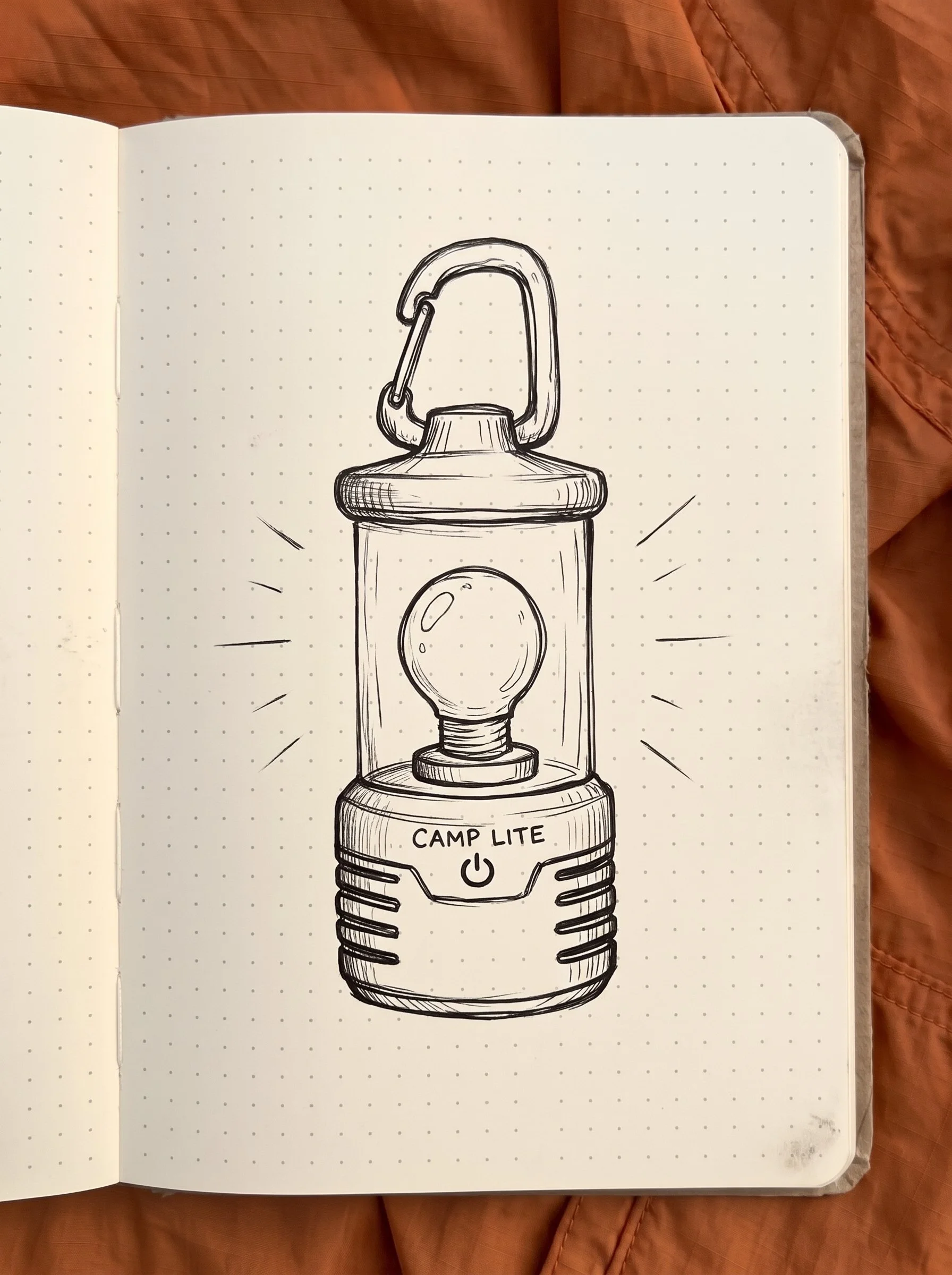
01 | DISCOVER
What do the complaints have in common?
A review of customer feedback and support requests reveals several possibilities, including battery performance, charging conditions, and runtime expectations.
Next: Take a closer look at how customers charge and use their lights.
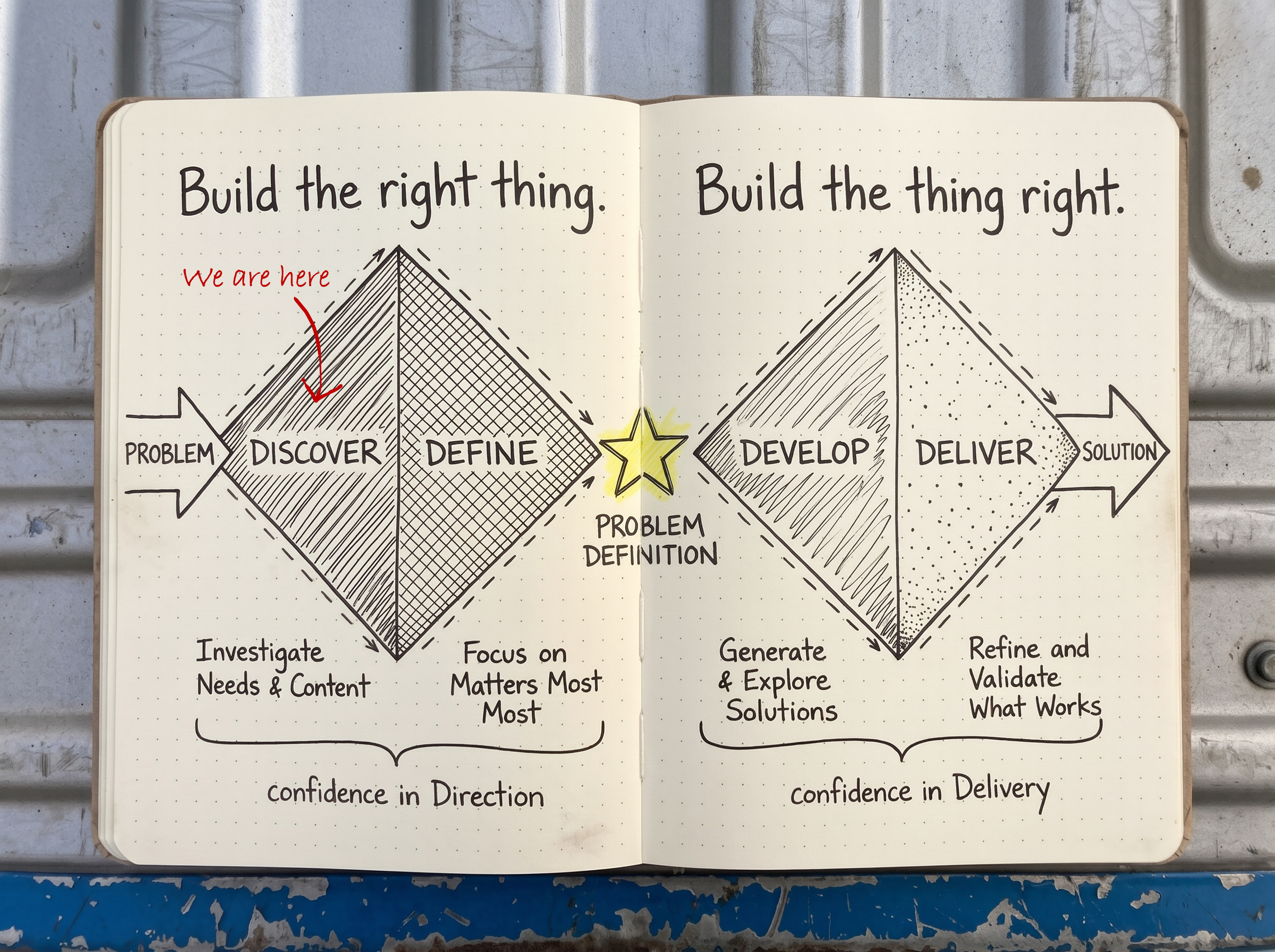
02 | DEFINE
What's behind the disappointing runtime?
Customer interviews, field observations, and product checks reveal that the batteries perform as specified. However, some owners overestimate how much solar charging occurs under typical camping conditions.
Existing product information doesn't adequately explain the effects of sunlight, charging time, and panel orientation.
Direction established: Improve charging guidance and set clearer expectations before considering a battery redesign.
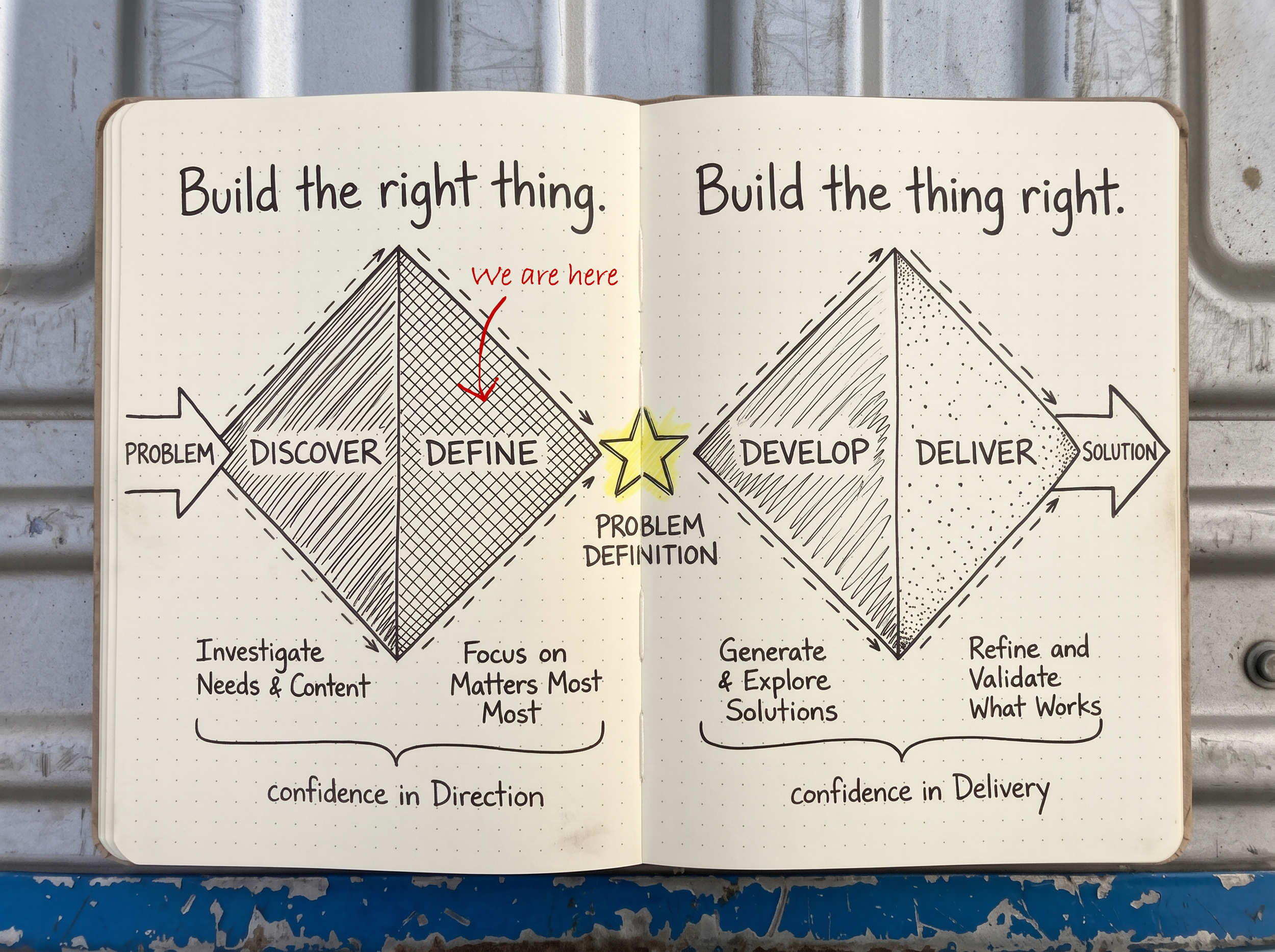
Build the right thing. Confidence in Direction.
03 | DEVELOP
How can the charging experience be clearer?
Camp Lite explores revised instructions and simple visual guides. Research compares the alternatives to identify which most clearly explains charging conditions and expected runtime.
Next: Evaluate the improvements during realistic outdoor use.
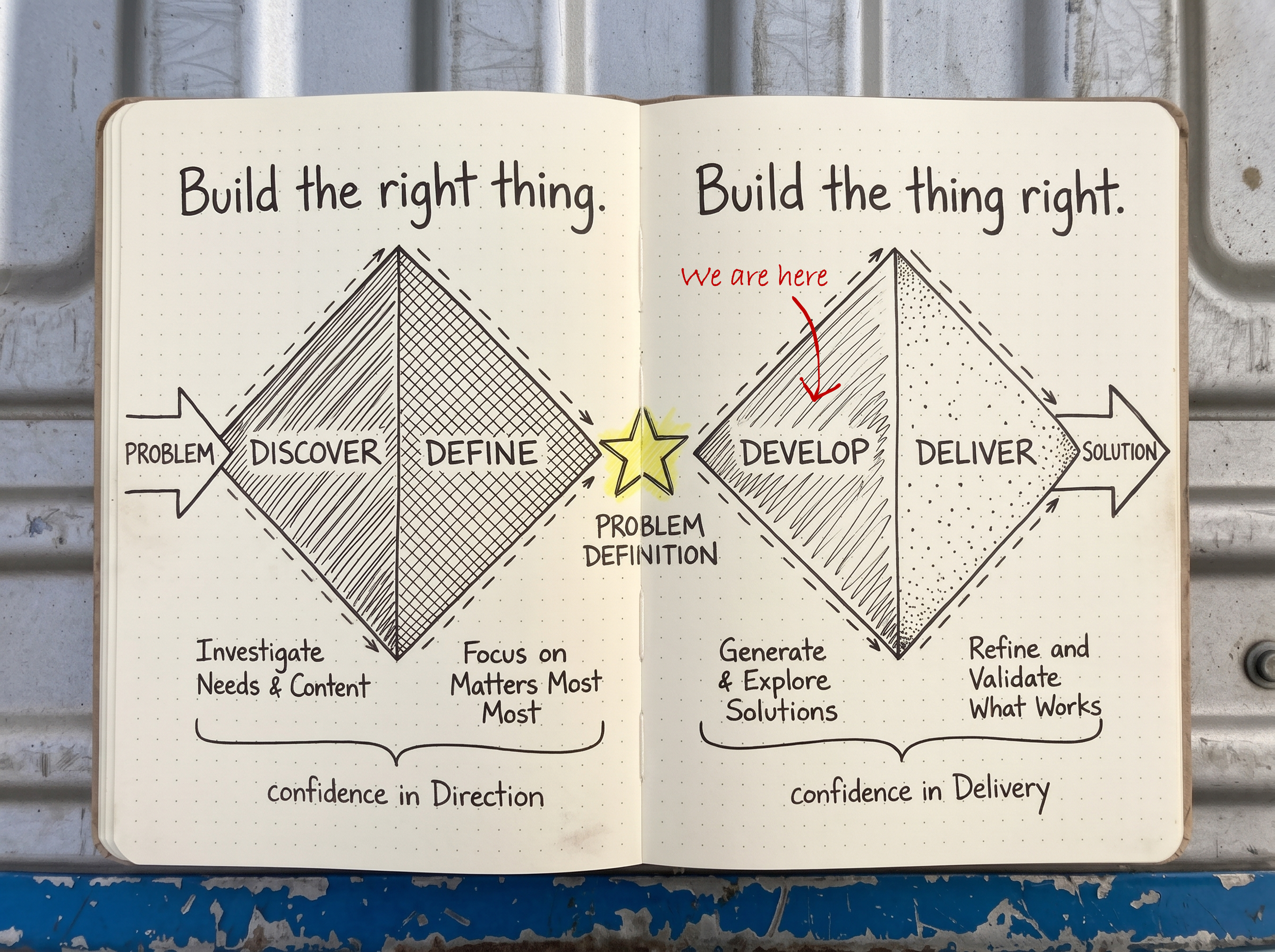
04 | DELIVER
Does the revised guidance work in practice?
Follow-up usability testing shows that customers better understand how to charge their lights and what affects runtime.
Camp Lite updates its product information and instructions to clarify solar charging and realistic runtime expectations.
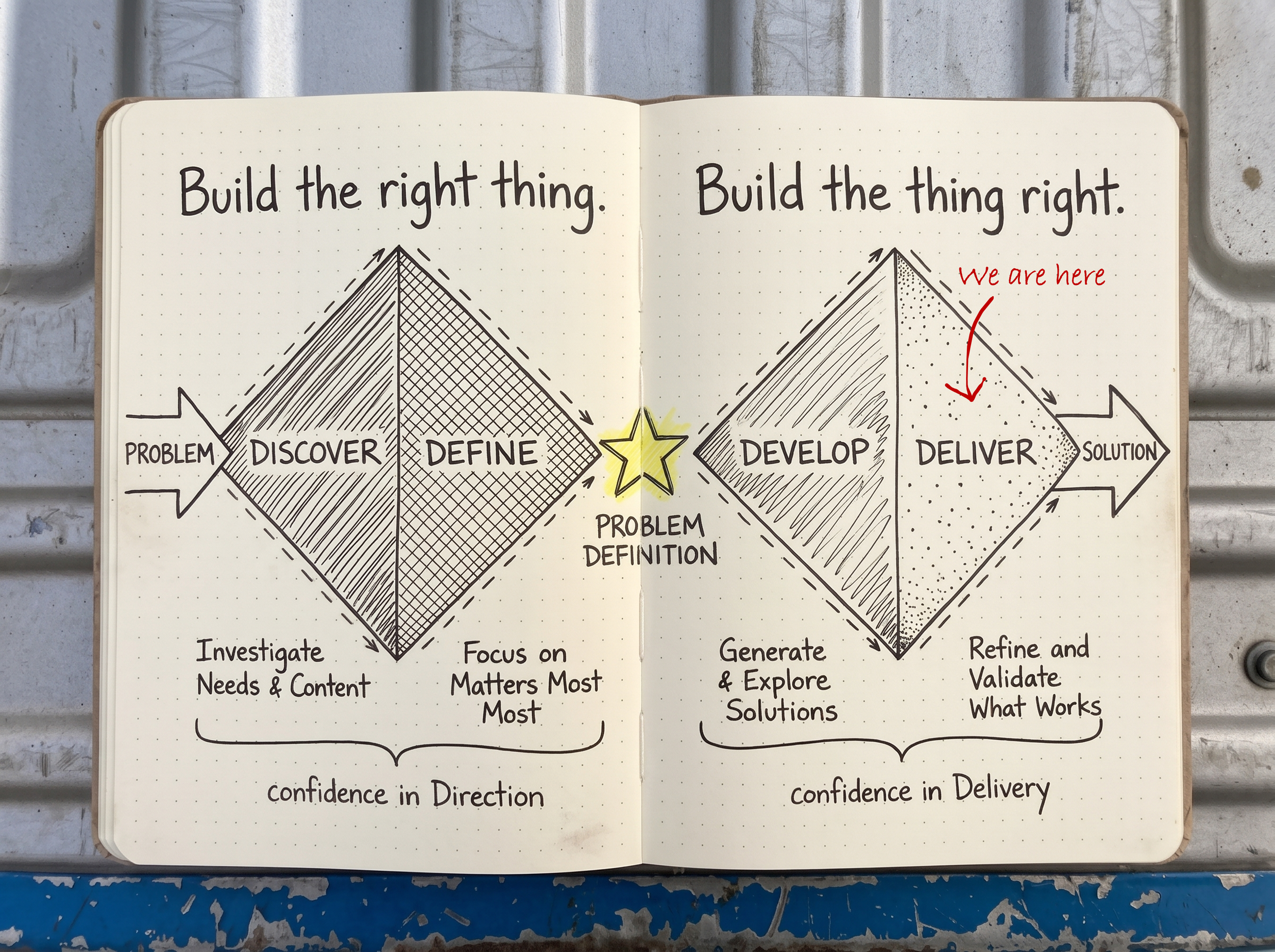
Build the thing right. Confidence in Delivery.
Ongoing Customer Understanding in Practice
An emerging question. A head start on understanding it.
Camp Lite recently raised its prices. Since then, Purchase Path research has picked up more customers reporting lengthy purchase decisions, sometimes three months or longer, and growing hesitation about whether the lights justify their premium price.
But the company has an advantage.
Its Customer Understanding Engine (CUE) has been running for a while now.
Over the past five quarters, the Lifestyle Impact dashboard has consistently shown that longtime owners most value the lights' appearance, substantial feel, quality materials, and durability.
The contrast suggests a possibility: the qualities longtime owners appreciate most may be difficult to recognize before purchase.
Are prospective buyers recognizing the qualities that owners have come to appreciate?
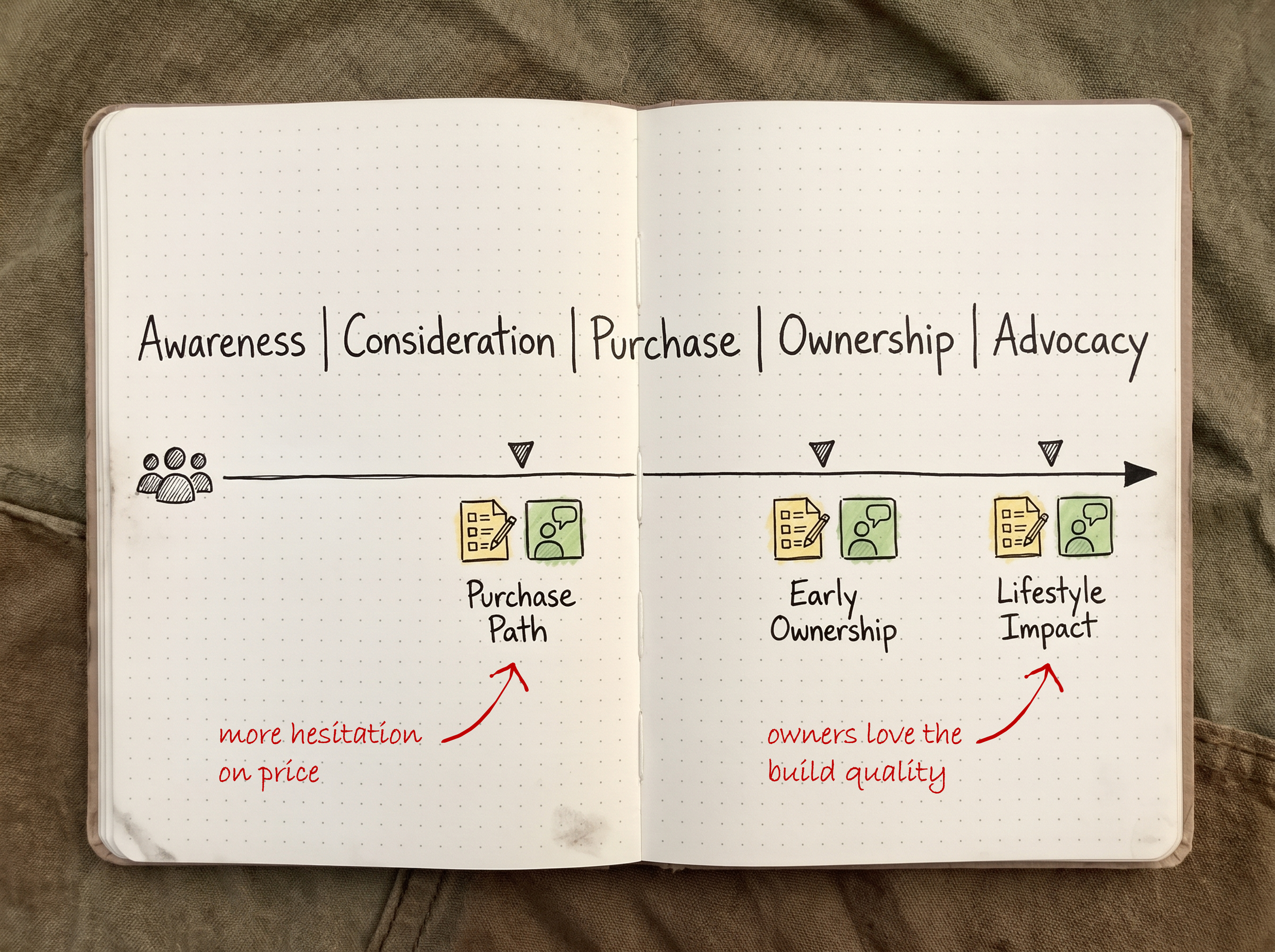
Single Study
With a new social media campaign weeks away and a limited research budget, Camp Lite opts for a Single Study: in-depth interviews with recent purchasers.
The interviews explore what influenced their decisions, which alternatives they considered, what created hesitation, and what finally convinced them to buy.
What the interviews reveal
Only two of the ten customers had handled a Camp Lite before purchasing.
Both described how the construction and materials made the product's quality immediately apparent.
Among the remaining eight, most had read favorable reviews, but all had struggled to appreciate the light's physical qualities and long-term value online. Several said they came close to walking away because they couldn't see what justified the premium price.
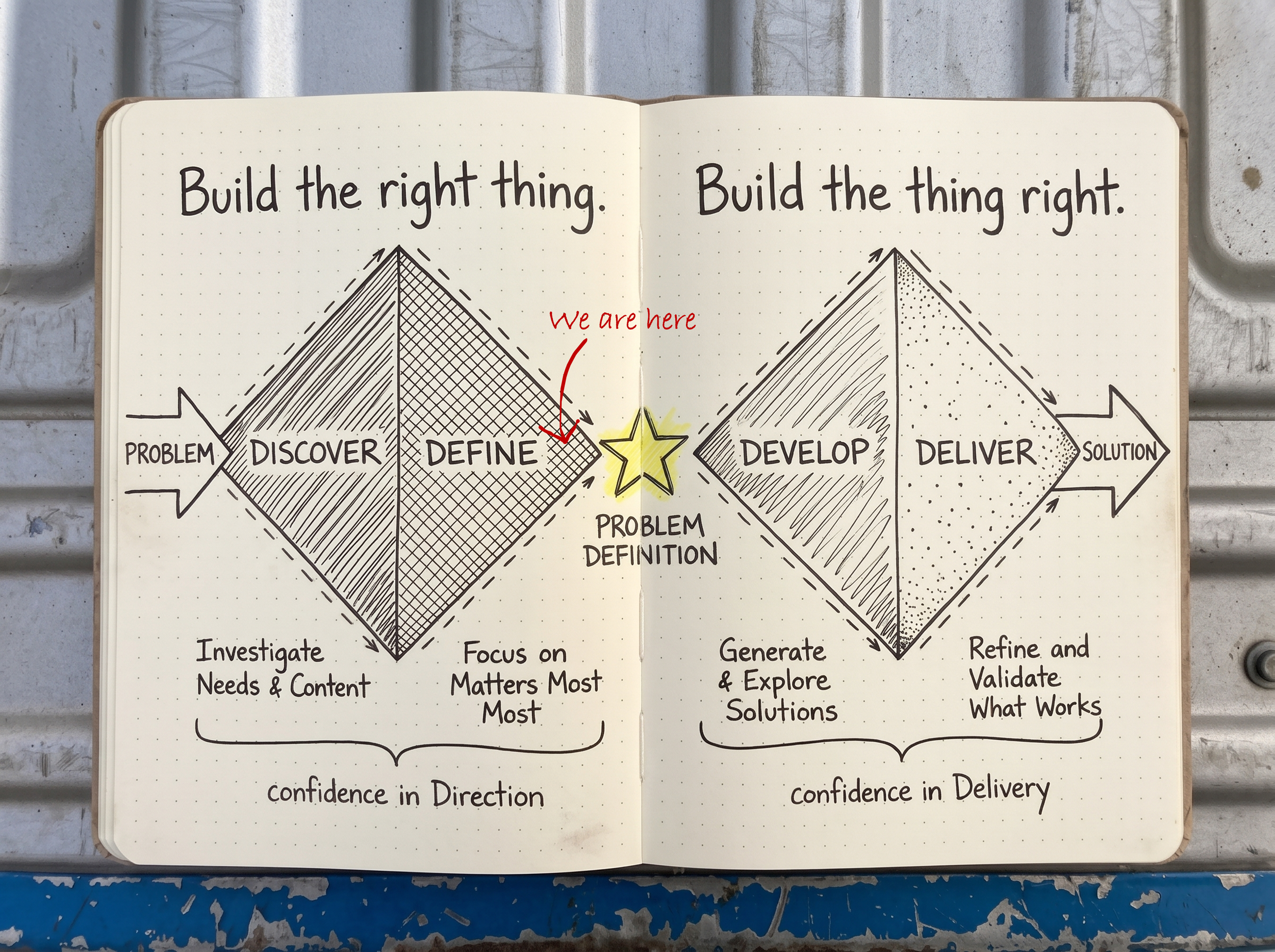
What Camp Lite does next
Camp Lite updates its product pages with closer views of materials, construction details, and testimonials from longtime owners. The upcoming campaign will also feature those qualities.
The team also considers hands-on demonstrations at its next outdoor event, giving prospective customers an opportunity to experience the lights' look, feel, and build quality.
Meanwhile, CUE continues tracking purchase hesitation, decision timelines, and perceived value as new customer responses arrive.
What the Work Produces
Focused Research
Research plans · Interview findings · Field observations · Usability results · Evidence summaries · Recommendations · Decision briefs
Ongoing Customer Understanding
Survey instruments · Live dashboards · Customer feedback patterns · Trend analysis · Interview findings · Integrated reports · Research readouts
What could research uncover in your business?
I'd be interested to hear what's working, what could be better, and what challenges are on your mind.